
Author
Christoph Freidhofer
Date
15.04.2026
Article ID
PI260468
Reading time: 3 minutes
Fire Resistance Tests for Large-Format Building Components and Materials From a Single Source
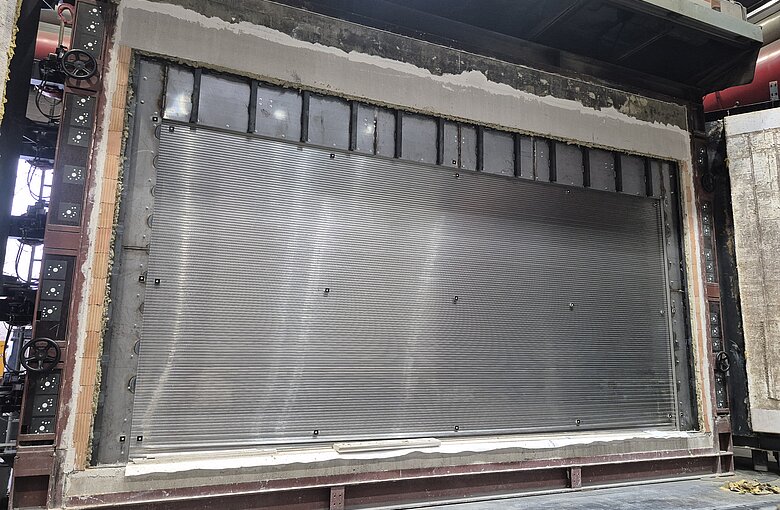
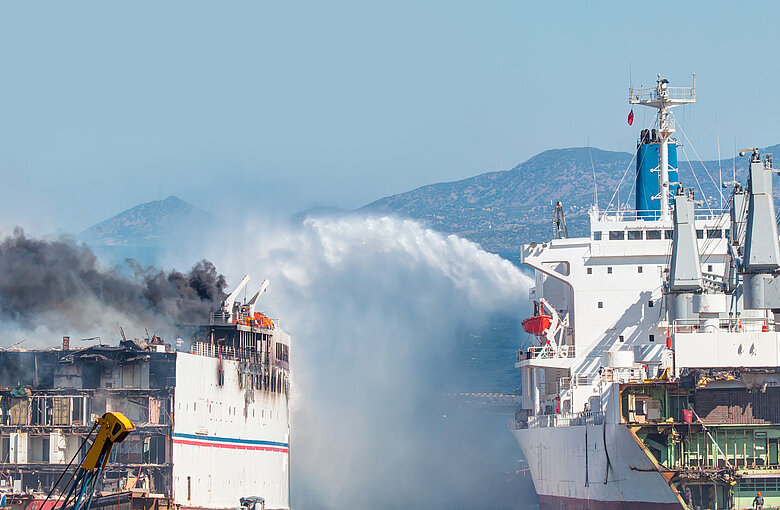
On average, it takes 8 to 10 minutes for the fire department to arrive at the scene of a fire. Different rules apply on the high seas. The nearest fire station is often hundreds of kilometers away. That is why it is important that fire protection systems on ships deliver on their promises in order to protect human lives and property. Since late 2025, ift Rosenheim has been listed as an accredited test laboratory in the GISIS database of the International Maritime Organization’s (IMO) and tests components and materials for use in shipbuilding according to the FTP Code. This is based on established EN standards. Tests conducted in accordance with IMO standards place high technical demands on laboratories, testing equipment, and testing personnel due to their lengthy duration. In addition to large-scale tests measuring up to 8 m × 5 m, fire performance tests on individual building materials provide important insights for new developments and enable a holistic approach. For manufacturers in the door and gate industry who already have their products tested at ift Rosenheim, IMO accreditation opens a direct path to a new market segment.
Fire Safety on Ships: Specific Requirements
Yachts, cruise ships, and container ships must accommodate many different spaces within a very limited area, such as living quarters, galleys, storage rooms, and engine rooms. Most of the walls on board are made of steel, which conducts heat quickly. This is how fires can spread through heat conduction alone. Long hallways, stairwells, and ventilation shafts intensify the stack effect. Doors, gates, bulkheads, and windows therefore serve as a critical barrier to limiting the spread of fires.
IMO Accreditation: Legally Binding Internationally
The IMO regulates the fire testing requirements for ship components and materials through the "International Code for Application of Fire Test Procedures" (FTP.) Since this standard is based on well-known EN standards, the test methods and evaluation criteria are not new to many manufacturers. If a laboratory is qualified to conduct fire resistance or fire behaviour tests according to the FTP Code, it is listed by the IMO in the GISIS database. In late 2025, ift Rosenheim was evaluated by the relevant national authority and subsequently added to the list. For manufacturers who already have their products tested at ift Rosenheim, this makes it easier to enter the maritime market, as they can now have their doors, gates, windows, bulkheads, hardware, and building materials tested by a single provider according to the requirements of the FTP Code. You will receive test reports that are recognized by shipyards, ship suppliers, and shipping companies worldwide.
Resistance to Fire up to 120 Minutes
While fire safety components intended for use on land are typically tested for fire resistance for 30, 60, or 90 minutes, the FTP Code requires test durations of up to 120 minutes. “The difference between a 90-minute and a 120-minute test should not be underestimated.” Throughout the entire process, the temperature in the furnace must be kept stable and evenly distributed. "At the ift-Centre for Fire Testing, we have five furnaces capable of accommodating elements up to 8 m × 5 m, as well as the necessary testing expertise to reliably meet these requirements," said Markus Leppin, M.Eng., Head of the Testing Division for Fire, Building Acoustics, and Facades at ift Rosenheim. In addition, the fire behaviour of all relevant building materials used in shipbuilding can be tested on the test rigs at ift Rosenheim. This combination allows for a holistic approach of the products and provides manufacturers with valuable insights for new product development.

Jürgen Benitz-Wildenburg
ift Rosenheim is committed to communicating the knowledge it has acquired to building professionals, planners and interested house owners dealing with windows, facades, glass, doors, garage doors and building materials.
Are you interested in publishing content on ift Rosenheim topics? Please feel free to contact me.